By Stark Water Tank Engineering Team | Updated: December 2025
For many plant managers and project directors, a water tank is often viewed as a simple line item on a procurement list—a necessary expense. However, from a strategic perspective, industrial water storage is not an expense; it is a critical infrastructure investment.
Choosing the wrong material can lead to unplanned downtime, frequent leak repairs, and premature replacement costs that dwarf the initial purchase price. Conversely, the right choice contributes to operational efficiency and long-term asset value.
In this guide, we move beyond basic specifications to analyze the Total Cost of Ownership (TCO) and Return on Investment (ROI) of the two dominant modular tank materials: Stainless Steel and Fiberglass Reinforced Plastic (FRP).
The Financial Case for Stainless Steel (SS) Tanks
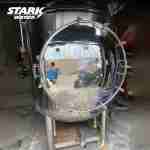
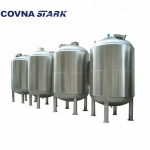
Stainless steel is widely recognized as the gold standard for hygiene and physical durability. When your project demands longevity and strict compliance, our Stainless Steel Products Series provides an uncompromised solution.
1. Material Grades & Durability (SS304/316)
We utilize high-grade SUS304 and SUS316L stainless steel. Unlike coated carbon steel which relies on a surface layer for protection, stainless steel offers intrinsic corrosion resistance throughout the material. This makes it impervious to UV radiation, ensuring it will not crack or degrade even under decades of intense sunlight exposure.
2. The 40-Year Asset Lifespan
A properly maintained stainless steel tank can serve a facility for 30 to 40 years. When you amortize the initial cost over four decades, the annual cost of ownership is often lower than cheaper alternatives that require replacement every 10-15 years.
3. Positive Residual Value (The "Scrap" Bonus)
This is a factor often overlooked in ROI calculations. Stainless steel is a recyclable commodity. At the end of the tank’s life—or if your factory relocates—the material retains significant market value, turning a disposal cost into a cash recovery.
4. Ideal Applications
Our stainless steel range is engineered for:
- Food & Beverage: Non-porous surfaces prevent bacterial growth.
- High-Temperature Storage: Withstands thermal shock better than plastics.
- Potable Water: Meets international drinking water standards.
The Financial Case for FRP (Fiberglass) Tanks
FRP (Fiberglass Reinforced Plastic) is not just a "cost-effective alternative." In specific industrial environments, it is the smarter engineering choice. Our Fiberglass (FRP) Tanks are designed using advanced winding technology to maximize strength-to-weight ratios.
1. The Corrosion Cost Saver
In highly aggressive environments—such as wastewater treatment, desalination plants, or chemical storage—metal tanks face the risk of chloride stress corrosion cracking. FRP is chemically inert to a wide range of acids, bases, and salts.
The ROI here is defensive: You save money by avoiding the catastrophic failure that would occur with metal tanks in corrosive settings.
2. Lightweight & High Strength
FRP materials offer a high strength-to-weight ratio. This significantly reduces the structural load requirements for rooftops or platforms, potentially lowering your civil engineering construction costs.
3. Versatility in Water Treatment
Beyond storage, FRP is the preferred material for pressure vessels in water filtration systems (such as sand filters and softeners) due to its ability to handle pressure cycles without metal fatigue.
The "Hidden" Costs: Logistics & Installation
The purchase price of the tank is only half the equation. Logistics and installation labor are the primary drivers of cost overruns in international projects.
Modular Design: The Logistics Advantage
At Stark Water Tank, both our Stainless Steel and FRP solutions utilize a modular/panel design or compact shipping methods. Unlike traditional welded tanks that ship as massive, air-filled vessels, our systems are optimized for container transport.
- Freight Savings: We can ship high-capacity storage solutions globally in standard containers, reducing ocean freight costs by up to 60%.
- Site Accessibility: Modular panels can be carried through standard doors or elevators, making them ideal for retrofitting existing factories worldwide.
Speed to Operation
Time is money. Our bolted tanks require no on-site welding. This eliminates the need for hot work permits and long curing times. Your facility can be operational weeks sooner compared to concrete or welded steel projects.
ROI Showdown: A 10-Year Comparison
Below is a comparative analysis of how costs accumulate over a decade.
| Feature | Stainless Steel (SS304/316) | FRP (Fiberglass) |
|---|---|---|
| Initial CapEx | High | Low to Medium |
| Corrosion Resistance | Excellent (General) | Superior (Chemical/Saline) |
| Life Expectancy | 30-40+ Years | 20-25 Years |
| End-of-Life Value | Positive (Recyclable) | Negative (Disposal Cost) |
| Key ROI Driver | Asset Longevity | Chemical Resistance & Low Entry Cost |
Decision Matrix: Which One Should You Approve?
Select Stainless Steel If:
- You are storing potable water, high-purity water, or food ingredients.
- Your priority is asset value retention over 20+ years.
- The tank will be exposed to high temperatures or extreme physical stress.
Select FRP If:
- You are storing brine, wastewater, or aggressive chemicals.
- You need to maximize storage capacity with a limited initial budget.
- The installation site is near the ocean (high salt air environment).
Get a Factory Direct Quote for Your Global Project
Whether your project is in the USA, Southeast Asia, or anywhere else in the world, sourcing directly from the manufacturer is the single most effective way to improve your bottom line.
Stark Water Tank provides industrial-grade modular tanks and vessels with global shipping capabilities.